I took my puppy to the vet during an extreme weather event.
By sharing this story, specifically the chaos and community spirit I witnessed around me, I hope to show how a relatively small disruption to infrastructure can have significant consequences for businesses and local people.
First, an acknowledgement. The South West has been hit by a series of storms. Further along the UK coast the impact has been devastating, with prolonged power outages and communication blackouts. Homes have been evacuated. Lives have been lost. I do not wish to detract from the scale of the suffering experienced.
The 28th January 2026 made for a remarkable journal entry. I can now say I have experienced the consequences of climate change first hand, with a direct impact on my day to day life*.
It’s both very real and very surreal, and worth sharing, not least as it will happen to all of us.
Even though I've been banging this drum for a decade, it still came sooner than I expected.
What struck me most, was how it didn’t take much.
Let’s set the scene:
My home is separated from the town by a floodplain. It floods often, works brilliantly and looks beautiful. Within a week you’ll see deer grazing and swans swimming on the same patch of land. Sometimes, the road that cuts across it floods too.
In recent weeks, we’ve experienced relentless rainfall, so I had to drive to the vets around a bypass. All business as usual during an especially soggy spell.
But this time was different. I’d heard previously unheard of rumours that the road to the vets, on the opposite side of the town, was cut off by water too.
I gave them a call. All appointments that morning had been cancelled, but I was welcome to try my luck.
A derailed day:
I pivoted around a second bypass, an attempted to park somewhere. Anywhere!
I didn’t fancy my chances. Especially, given the haphazardly scattered vehicles, driven up kerbs by desperate owners, vying to claim a patch of the grassy hillside. The aesthetic was abandoned vehicles in a zombie apocalypse.
I observed how once one person does it, the rest follow. As soon as water flows over a road, rules go out the window, fast.
I wondered why it was so busy. Then it dawned on me that the carpark to the mainline station was cut off too. Many people would not have been able to get the train into London.
It felt like a miracle that I’d secured an actual parking spot. As I walked my blissfully unaware companion to his appointment, I thought of the cancelled city meetings a hundred miles away.
The waiting room:
When I arrived I was the only customer in the waiting room. I sat and listened.
The team were busy and understandably animated, attempting to gain some clarity on how to deal with the ever-changing situation.
Here is just a flavour of the impact, which spanned from escape planning to emergency care:
- Stuck staff: The water arrived suddenly, within one shift, which meant the team’s cars had been stranded overnight. Many had no way to get home without support from family or friends (note: ordering taxis for short journeys here is not easy at the best of times).
- Cascading concern: A woman was worried about how she would take her mother-in-law to a medical appointment the next day if she could not access her vehicle by nightfall.
- Safety: A lady left with a mop in her hand. Not to deal with the flood - that would be futile! But to have a stick so she could feel safer walking along a flooded pavement with submerged feet. As she left the building, she remarked, “I will be gone for some time!”.
- Re-scheduling: A receptionist remarked how difficult it would be to rearrange all the regular appointments, with a bulldozed schedule and no end in sight.
- Literal stranded assets (and animals): The show must go on in an environment like this. Pets who had been kept overnight had to be carried to the railway tracks and passed to their relieved owners, while redeployed company vehicles from other sites completed urgent home visits.
They say never work with animals, but it’s especially hard to work with animals amidst climate chaos. I was impressed with how the team rallied together. They even found the time to give my puppy a treat.
Upon hearing he had gained half a kilo since his last visit (good boy) we went on our merry way.
Shallow water impact runs deep:
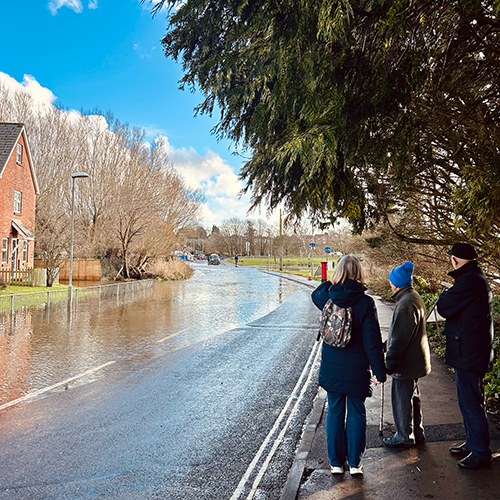
I realised it wasn’t just the veterinary surgery in a bind. The entire industrial estate was stranded. Over 20 businesses, most of which were reliant on vehicles to operate, were unable to exit the area.
We continued along the road to the source of the flood.
That’s when I was struck by just how shallow the water was.
The word flood had always made me think of Noah’s Ark, or images on the news of cars being swept away.
It turns out the AA advises you shouldn’t drive through water deeper than 10cm. Twelve inches and you’re in serious trouble.
A car is not much better than a good pair of wellies.
Every storm cloud has a silver lining:
I caught up with three pedestrians, unable to go any further. I asked them whether this has happened before.
“Not in my twenty years here”, remarked the man, “and some of the older residents say they’ve not seen anything like it in their lifetimes”.
A lady then expressed her disappointment that she wouldn’t be able to walk to town to watch a film. I was driving back that way, so I was pleased to be able to drop her off outside. At least our community cinema got one more customer that day.
We are all in a climate waiting room:
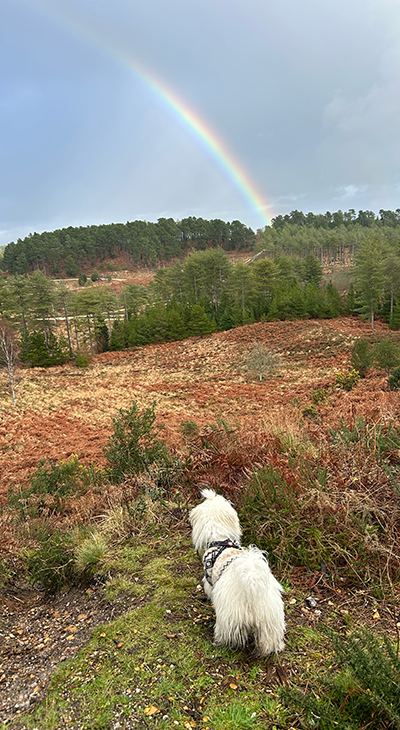
When I got home, I was troubled by what I’d seen, but my puppy’s ignorance became a source of bliss. My biggest challenge reverted to how I’d get him to eat his worming tablet and flea treatment.
These are preventative medicines. We don’t wait for the symptoms or suffering.
It’s a hard pill to swallow, what our species has done to our only home. What if we could treat our planet as well as our pets?
There’s still so much we can do to prevent the worst case for communities and to buffer the burden on local businesses.
As Jayne Kirkham MP for Truro and Falmouth stated:
If storms of this magnitude happen again, as they will unless climate change is tackled globally, we need to be prepared.
Estimating The Financial Losses
We know organisations can find it difficult to quantify financial implications of physical climate risks. That’s why we’re using Caitlin’s story to bring to life some techniques you can apply to your own business.
This table offers an illustrative example of the estimated costs associated with what Caitlin witnessed. You can explore how we arrived at these figures here.
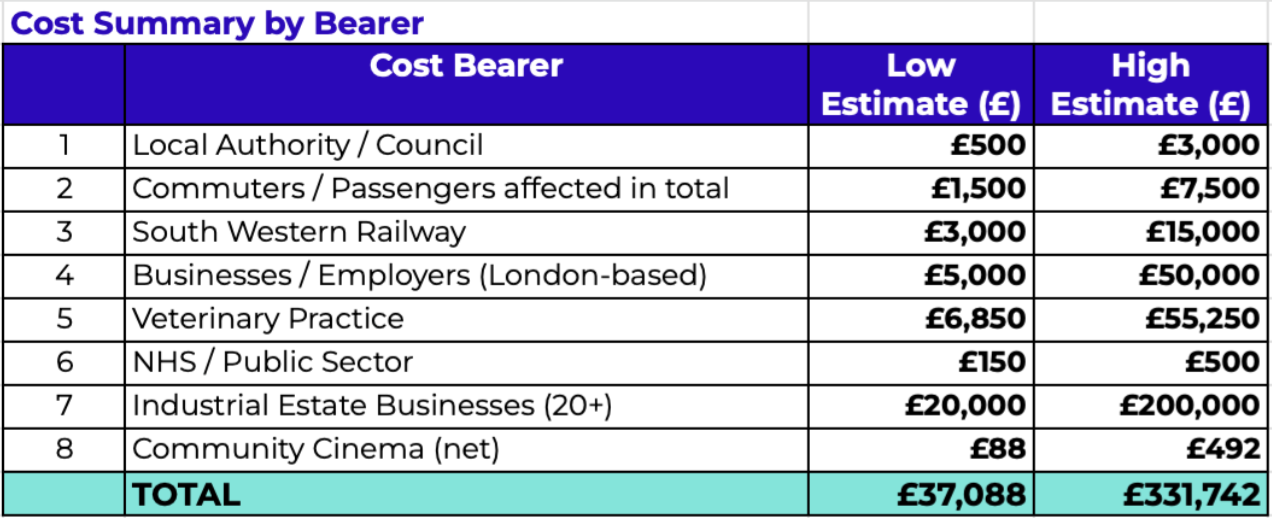
Our high-level estimation shows that this one extreme weather event could cost hundreds of thousands of pounds. The financial effects are spread across many different parties in both the public and private sector.
Organisations close to the flood and further afield were affected, and each will feel the shock differently based on a variety of factors.
Who bears the cost will always be a hot topic in climate change. Understanding how your organisation could be hit financially is a critical step towards taking action.
Every business can begin by understanding the practical hazards posed by our changing climate and their cost implications.
You have come to the place for thought leadership.